Why verified certificates matter to employers
A QR code that opens a verified page saves hiring teams a phone call, and gives candidates an edge. Here is why it matters on both sides of the interview table.

Every hiring process has the same quiet gap. A candidate lists a qualification, a training course or an award, and someone has to decide whether to take it on trust or check it. Checking usually means finding the issuer, sending an email and waiting. Most of the time nobody does, which is fine until the one time it matters.
A verifiable certificate closes that gap. Instead of a piece of paper that could have come from anywhere, the employer gets a link or QR code that opens a record held by the issuer, and can see in seconds whether it is genuine.
What it saves employers
- Time. A scan or a click replaces an email to a training provider that may take days to answer, if it answers at all.
- Certainty. The result comes from the issuer’s record, not from the copy the candidate sent, so an edited PDF doesn’t pass.
- Current status. Some certificates expire, and some are withdrawn. A live record shows whether this one is still valid today.
- A paper trail. For regulated roles, a link to the issuer’s record is a simple thing to keep with the hiring file.
What it gives candidates
For the person who earned the certificate, verification is a quiet advantage. Their achievement can be confirmed without anyone chasing their old college or employer, and it travels with them: on a CV, in an application form, or in the licences and certifications section of a LinkedIn profile.
It also protects the value of the work they put in. When certificates are easy to fake, every genuine one is worth a little less. When they are easy to check, the real ones stand out. Our guide to adding a certificate to LinkedIn shows how to put one where recruiters look.
“When certificates are easy to check, the real ones stand out.”
What a hiring team should check
Whichever system issued it, a verified record should answer five questions:
- Who issued it? The organisation’s name, ideally confirmed by the platform rather than typed by anyone.
- Who is it for? The name should match the candidate’s.
- What does it say? The title, course or award, and the date, should match what the candidate claimed.
- Is it still valid? Not revoked by the issuer, and not past an expiry date.
- Is the record on the issuer’s side? A page on the certificate platform’s own domain, not a file or a lookalike web address.
How it works with Certale certificates
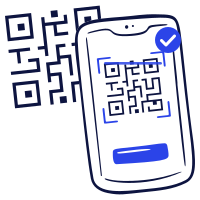
Every Certale certificate carries a QR code and an eight-character code printed beneath it. Scanning the QR code with a phone camera, or typing the code at certale.com/verify, opens the certificate’s page on certale.com. It shows who issued it, to whom and when, and whether it is active, revoked or expired. It is free for anyone and needs no account. The checks behind it are explained in how certificate QR verification works.
If you issue certificates
If people use your certificates to get jobs, places or promotions, making them checkable is a courtesy to everyone downstream, and it protects your name from forgeries. Put a verification code on every certificate, keep the records available for as long as the certificates are meant to be used, and withdraw any you issued by mistake. On Certale, the QR code, the code and the verified page come with every certificate on every plan, including Free; revoking certificates and setting expiry dates are part of the Business plan.
The Certale team
Certale, by PPT-Design LtdWe design Certale’s 1,000+ certificate templates and build the app that issues and verifies them. In the Journal we share what we have learned about recognising people well: the wording, the design and the practical side of getting certificates into the right hands.